
In partnership with

FIELD & FATHOM | No. 047
Daily Letter · Mindset Operating System · 8:42 PM
The Same Stadium
FATHOM THIS
There is a specific kind of pain that comes not from failure but from proximity to success you could not quite reach.
Not the clean pain of giving everything and falling short. The murkier kind. The kind that arrives when you are standing in the right uniform, in the right building, next to the right people — and you know somewhere underneath everything that you are not fully there. That the body is present and the mind has already left the room.
Most people never talk about that kind in public. It does not make a compelling highlight. It does not fit neatly into a redemption narrative because there is no obvious villain. Just a person in the wrong internal state at the wrong external moment, standing inside an opportunity they worked years to earn and somehow could not bring themselves to be present for.
I know that feeling from the inside. I have been that person.
And I have sat, sixteen years later, in the same stadium where my father watched it happen on television — and smiled.
FIELD REPORT | Navy-Marine Corps Stadium, 2010
In 2010 I was shot.
Not injured. Not in a slump. Shot in the way that happens when the engine is technically running but something essential has gone out of the fuel. I was burned out — and not for reasons anyone watching from the outside would have understood, because from the outside, nothing looked wrong.
I was playing some of the best lacrosse of my career. Physically I was in exceptional shape. The indoor game in Canada had given me something the outdoor game had never quite delivered — a different pace, a different kind of contact, the specific education that comes from playing alongside and against the best players in the world in close quarters where every mistake is immediately costly and every skill gap is immediately visible. The Canadians taught me how to truly play the game. I came back from that experience a better player in every measurable sense.
And yet.
I found myself on the practice roster of a professional outdoor team, standing in a uniform I had earned, next to players I respected, and I was done before the work was over.
I did not know how to name it at the time. I just knew that something that had always felt like oxygen — the game, the competition, the daily pursuit of getting better at the only thing I had loved since I was a kid on sidelines in Baltimore recording VHS tapes — had stopped giving me what it once did. And I could not figure out how to want it back.
My dad was watching a television broadcast one afternoon when the camera caught a timeout on the sideline.
He saw me.
He did not call me immediately. He told me later what he had noticed. My body language said everything my mouth had not been willing to say out loud. Slumped. Present in uniform and absent in everything else. Standing next to a teammate who had just finished an All-American career at UVA — drafted, fresh, his entire professional window just opening — and the contrast between us in that frame was not subtle.
Same uniform. Same field. Worlds apart internally.
He was ready to compete. Patient with the process. Lit up by the same opportunity I was quietly trying to survive.
A week later I was released — a story for another time. Two weeks after my release the head coach was fired. That same player standing beside me in that frame eventually earned a starting spot — and two months later the team and their new staff won the 2010 MLL Championship.
I had been there. I had been inside the opportunity. I had simply not been able to be inside myself at the same time.
That is the honest version of what happened in 2010. Not a bad coach or a bad situation or bad timing. A young man who had not yet learned the difference between being physically present and being actually available — to the moment, to the team, to the version of himself that the game was still trying to build.
MINDSET OS | The Same Stadium, 2026
Bill Gurley spent years writing about one idea that I keep returning to — that the single most important thing any person can do is find the work that gives them energy rather than draining it, and then commit to that work with a patience most people are not willing to hold for long enough to see it compound. He documented case after case of people who were technically succeeding by every external measure while privately running on empty — and the ones who eventually broke through were almost never the ones who worked harder in the wrong direction. They were the ones who finally got honest about the direction.
Ted Lasso understood something about this that no coaching manual has ever quite captured. He walked into rooms full of people who did not believe in what they were doing and refused — genuinely, stubbornly, without performance — to not believe in them. Not because he was naive about the gap between where they were and where they needed to be. Because he understood that belief is not a reward you give someone after they earn it. It is the environment you build before they are ready to earn it. You create the conditions. Then you trust the person.
My dad and my mom had always believed in me that way. My dad never panicked when I was sent to the third midfield line. My mom never flinched either — she was the steady presence that made it safe to fail without it meaning something permanent about who I was. Neither of them dissected what was happening on that MLL sideline in a way that made me smaller for having lived it. They just stayed in the room. Both of them. Present. Patient. Watching. The kind of unconditional belief that you do not fully understand the weight of until you are old enough to know how rare it actually is.
In July 2026 we sat together at Navy-Marine Corps Stadium in Annapolis for the Mad Dog 2030 National Team game.
The stands were filling up. Players from both teams were scattered across the field, stretching, loosening up, the specific kind of organized looseness that happens before something real is about to begin. We did not say much getting to our seats. We did not need to. Some of the best conversations happen before either person speaks.
And as I watched the warmups I was not just watching another lacrosse game.
I was looking at nearly thirty years of my own life arranged across a single field.
The airports and rental cars. Hotel breakfasts and long drives between tournaments. Coaches I had known for decades. Parents who remembered stories I had forgotten. Players chasing the same dreams we once chased ourselves. The endless accumulation of moments that I had spent most of my life treating as separate chapters and that now, from this distance, felt like one continuous story.
At some point during the warmups I glanced over to a section of the stadium — not because I was looking for anything specific, just because the eye moves — and I realized I was looking at roughly the same area where my dad had watched that television frame in 2010. Where the camera had caught a kid in a professional uniform with his shoulders forward and his energy already somewhere else.
And I smiled.
Not at what I had lost in that moment. At everything that had come from it.
The release that felt like a verdict. The years of building something in San Diego that became one of the most meaningful chapters of my life. The COVID season that slowed everything down long enough for the roots to grow deeper. Meeting Anna. Getting married. Becoming a father. The moment she looked at me simply and said — reach out to a club program — and the chain of events that single sentence eventually set in motion.
Ravenscroft School. Atticus Lacrosse Company. Mad Dog Lacrosse. The state of the game in North Carolina and everything it is about to become.
Standing up as the final whistle sounded, I looked out at the field and felt something I could not have accessed at twenty-two years old in that uniform — not because I had not earned it yet, but because I had not lived enough of the story to understand what I was standing inside.
Gratitude. The specific, unhurried, unperformed kind that arrives when you have been through enough to know the difference between the thing you thought you wanted and the thing that was actually being built the entire time.
My dad sat beside me.
The Mad Dog 2030 team had just won.
I was not watching someone else's story anymore.
I was watching the next chapter of mine.
YOUR GREATEST CONTRIBUTION
It is not measured by championships.
It is measured by the number of people who become family because you chose to stay in it.
The players who feel known. The parents who feel welcomed. The coaches who grow together. The friendships that outlast the final scores. The kid who learns something about themselves inside a sport that they will carry into every room they walk into for the rest of their life.
None of it happens alone.
It exists because a wife believed before the path was clear. Because parents — both of them, steadily, without condition — encouraged meaningful work over comfortable work. Because friends stayed in the room during the seasons when the direction was not obvious. Because a player stood beside you in a timeout frame in 2010 and showed you, without saying a word, what it looked like to be fully present for an opportunity — and that image stayed with you for sixteen years until you were finally ready to understand it.
The game was never just the game.
It was always building something else underneath.
Find your harbor. Create your lane.
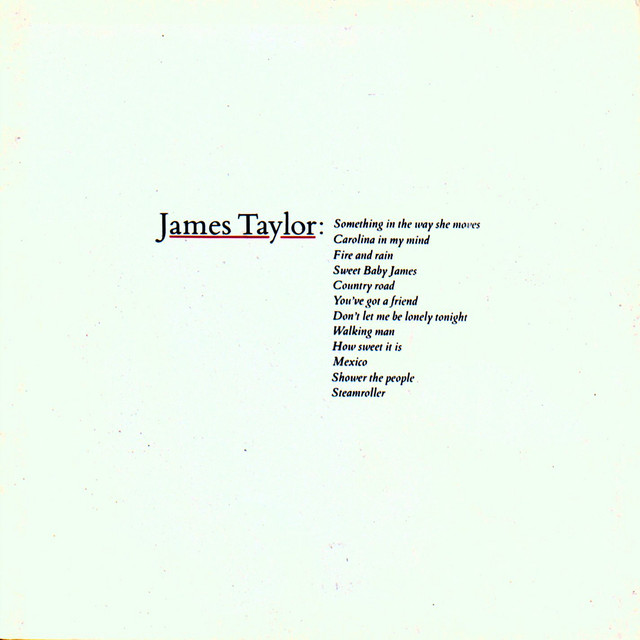
ON ROTATION | What's Playing
Some songs find you at exactly the right time.
My Spin Tonight:
About the Author
Kyle Smedley is the founder of Harbor Lane Holdings, building at the intersection of sport, people, and capital.
Career stops include Events.com, Tourmaline Builders, Lombardi Contracting Corporation, and DPR Construction. Today he leads Atticus Lacrosse Company, working alongside Mad Dog Lacrosse and Ravenscroft School, and Harbor Lane Company, operating across real estate, private equity, and talent placement.
Field & Fathom goes out every night at 8:42 PM.
Reach out directly: [email protected]
Until tomorrow,
Kyle
Founder · Harbor Lane Holdings · Atticus Lacrosse Company

Field & Fathom · Harbor Lane Holdings · Daily
Powered By People Who Keep Showing Up

Proud Sponsor
QBR prep used to take a week. Now it lands in Slack Monday.

Your best CSMs block an hour before the strategic QBR. They pull NPS trends, dig through support history, check adoption deltas, draft the deck. The customer feels seen.
The other 190 QBRs this quarter don't get that hour. The CSM scans the dashboard five minutes before the call. The customer answers the same baseline questions again.
Viktor changes that ratio. Before any QBR, message Viktor. He pulls account health, open tickets, product usage, and recent company news. Drafts the brief. Attaches the deck. Posts it in your DMs before the day starts.
Every CSM walks into every QBR prepared. Even when there are 200 of them.
20,000+ teams. Connects to Gainsight, Zendesk, Salesforce, and 3,000+ other tools. SOC 2 certified.