
In partnership with

FIELD & FATHOM | No. 030
Daily Letter · Mindset Operating System · 8:42 PM
TRIVIA | Lacrosse & Medicine
Start here. Answer at the bottom.
In 2018 he won the Tewaaraton Award and led his program to its first ever NCAA National Championship. He set a single-season record with 115 points. Three-time First-Team All-American. Two-time Academic All-American. Captain. He went to medical school at the same university where he played. He is now a neurosurgery resident at one of the most respected neurological institutes in the world — with over ten published research papers on brain cancer and neurological disorders. He never chose between the game and medicine. He did both. Who is he — and where did he play?
FIELD REPORT | See It Before You Do It
One minute. That is all this takes.
Sit down. Couch, chair, locker room bench, a patch of grass on the sideline before warmups. Close your eyes if it helps. Not while driving. Not while eating. One minute of complete stillness before the rep begins in your mind.
Now build the picture.
Start with your feet.
Where are they right now in this play? Are they loaded on your heels or are you on the balls of your feet — ready, weight-neutral, able to go left or right in the same instant? Feel the surface underneath you. Feel the difference between a flat-footed stance and one that is coiled and ready. Most players think about their hands first. The feet are always first.
Work upward. Ankles loose, responsive, absorbing the ground. Knees slightly bent — not locked, never locked. Hips square to your opponent or angled to create a lane, depending on what this play is asking of you. Core engaged — not rigid, engaged. The difference is that rigidity slows you down and engagement directs your power. Shoulders relaxed and low. Elbows in close to the body when you are protecting the ball, extended with purpose when you are creating space. Wrists and hands — are they soft and quick or are you gripping too tight? A tight grip is the enemy of a fast release. Feel the difference right now without a stick in your hand.
Now bring in your opponent.
Visualize the specific matchup you face most often. Not the hardest opponent you have ever faced — the typical one. The one who shows up every Tuesday and Saturday. Where is their weight? Are they on their heels or balanced? Which way do they want to push you? What does their stick do when you make your first move?
See yourself making the move. See them respond. See your second move — the one that comes from reading the response to the first one. Go punch for punch inside your own mind before you step onto the field.
Now pull back to the full picture.
Where are your teammates? Who has the ball right now in this scenario? If you do not have it — what are you doing? Are you creating a lane for the person who does? Are you setting a pick that nobody asked you to set because you read the play two seconds before it developed? Visualize your off-ball movement the way a hockey player moves when the puck is on the other side of the ice — continuous, deliberate, never static.
Now visualize a clear. Your team has just gotten possession. What is your assignment? Where do your feet go first? What does your body language communicate to the defense — urgency or hesitation? One tells them you are a threat. The other tells them you are available to be ignored.
Now visualize running on and off the field.
When you sprint onto the field your body language is visible to everyone — teammates, opponents, coaches, scouts. Does it say I am ready to change this game right now — or does it say I am just checking in? Jog when the moment is transitional. Sprint when urgency is required. Know the difference before the moment asks you to decide.
Finally — hear your coaches.
What do they typically say to you on field movements and defensive shifts? What is the one instruction you hear most often that you have not fully integrated yet? Visualize receiving that instruction on the fly, processing it in one second, and executing it on the very next rep. That is a trainable response. It starts in the quiet minute before the physical work begins.
One minute. Eyes closed. The whole play in your mind before your body ever moves.
Visualization is not a warm and fuzzy concept. It is a rep before the rep. Every elite performer in every arena — the surgeon, the architect, the trial lawyer, the lacrosse midfielder — runs it before the real thing begins.
See it clearly first. Then go do it.
MINDSET OS + PHYSICAL CHALLENGE | The Performance Pyramid
The Human Performance Pyramid, featured in HBR's 10 Must Reads on Mental Toughness, is a framework developed by Jim Loehr and Tony Schwartz in their 2001 article "The Making of a Corporate Athlete." It emphasizes managing energy — not time — as the foundation of sustained high performance. The framework identifies four interconnected dimensions requiring disciplined oscillation between stress and recovery to build real resilience.
Four layers. Each one dependent on the one beneath it. Rituals move the energy upward.
Physical Capacity sits at the base. It builds endurance and promotes mental and emotional recovery. Sleep, movement, nutrition, recovery. Not aesthetics. Not fitness as identity. The physical infrastructure that allows everything above it to function. The athlete not sleeping is not recovering. The executive who stopped moving is not thinking clearly. The parent running on empty is not present. The base is always the base — and it is always the first thing people abandon when life gets demanding. That is not a coincidence. It is a pattern worth breaking deliberately.
Emotional Capacity sits above it. It creates the internal climate that drives the Ideal Performance State — the specific emotional environment where a person performs at their actual best. The quality of your relationships. Your ability to stay connected to the people who matter. Your capacity to process difficulty without being consumed by it. The athlete who plays emotionally flat has already lost the matchup. The leader disconnected from the room has already lost the meeting.
Mental Capacity focuses physical and emotional energy on the task at hand. This is where preparation lives. Where the training-to-competition ratio matters. Where film study, deliberate practice, and structured reflection go. Mental capacity is depleted by live performance and replenished by preparation. Most people never replenish it — they move from meeting to meeting, game to game, and wonder why the quality keeps eroding.
Spiritual Capacity sits at the top — providing a powerful source of motivation, determination, and endurance. Not religion. Purpose. The specific, personal answer to why any of this matters. When it is clear the three layers beneath it have direction. When it is thin or absent the whole pyramid eventually tilts — sometimes slowly, sometimes all at once.
The rituals on the left side of the pyramid are the mechanism. Small, consistent, daily behaviors that move energy from the base upward. Without the rituals the framework is just a diagram on a page.
Which brings us to this week.
This week's ritual — the baseline trio:
Twenty pushups. Twenty squats. Ten minutes running — outside if possible, whatever pace holds for the full ten minutes. Do it before you open your phone in the morning. Every day this week.
Then come back and tell us how it went. Reply to this letter or post with #FieldAndFathom. The good, the bad, the ugly. Every rep counts. Every rep builds the base.
The pyramid does not build itself. Neither does the week.
TRIVIA ANSWER | Lacrosse & Medicine
Ben Reeves. Yale University. 2018 Tewaaraton Award winner. Led Yale to its first-ever NCAA National Championship. 115 points in a single season — a program record. Three-time First-Team All-American. Two-time Academic All-American. Captain.
After graduating he played professionally in the Premier Lacrosse League for three seasons while completing medical school at Yale. He is now a Neurosurgery Resident at the Barrow Neurological Institute in Phoenix — one of the leading neurological research and treatment centers in the world — having authored over ten publications on brain cancer, congenital brain disorders, and neurological inflammation.
He never chose between the game and medicine. He did both — fully, on schedule, without compromise. That is what a built pyramid looks like over a career. Layer by layer. Ritual by ritual.
ON ROTATION | What's Playing
Some music does not ask what genre it belongs to. It just plays.
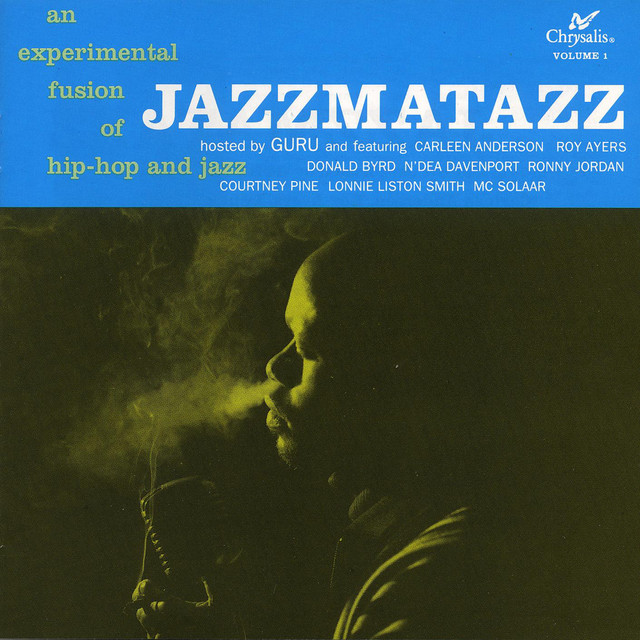
This week's listen: Loungin | Guru featuring Donald Byrd, Jazzmatazz Vol. 1 (1993)
In 1993 a rapper named Guru — the lyrical half of Gang Starr — walked into D&D Studios in New York City with an idea the music industry had no category for. Instead of sampling jazz records the way every other hip hop producer was doing, he called the original artists directly — Donald Byrd on trumpet, Roy Ayers on vibraphone, Lonnie Liston Smith on keys — and brought them into the studio to play live over hip hop beats. Jazzmatazz Vol. 1 was the result. Loungin opens the album — Byrd's trumpet lines overlapping and weaving around Guru's baritone, two generations finding common ground in a New York studio, the lineage of jazz and hip hop made audible in real time. Hip hop was always built on jazz. Guru just made the connection impossible to miss.
Put this on tonight. Let it set the pace for the week ahead.
ABOUT THE AUTHOR
Kyle Smedley is the founder of Harbor Lane Holdings, building at the intersection of sport, people, and capital.
Career stops include Events.com, Tourmaline Builders, Lombardi Contracting Corporation, and DPR Construction. Today he leads Atticus Lacrosse Company, working alongside Mad Dog Lacrosse and Ravenscroft School, and Harbor Lane Company, operating across real estate, private equity, and talent placement.
Field & Fathom goes out every night at 8:42 PM.
Reach out directly: [email protected]
Until tomorrow,
Kyle Founder · Harbor Lane Holdings · Atticus Lacrosse Company
Field & Fathom · Harbor Lane Holdings · Daily
Powered By People Who Keep Showing Up

Proud Sponsor

The best marketing ideas come from marketers who live it.
That’s what this newsletter delivers.
The Marketing Millennials is a look inside what’s working right now for other marketers. No theory. No fluff. Just real insights and ideas you can actually use—from marketers who’ve been there, done that, and are sharing the playbook.
Every newsletter is written by Daniel Murray, a marketer obsessed with what goes into great marketing. Expect fresh takes, hot topics, and the kind of stuff you’ll want to steal for your next campaign.
Because marketing shouldn’t feel like guesswork. And you shouldn’t have to dig for the good stuff.