
Sponsored by

FIELD & FATHOM — No. 020
Daily Letter · Mindset Operating System · 8:42 PM
TRIVIA: Category | Multi-Sport Athletes
How well do you know your athletic history? Answer is at the end of this letter!
Before becoming one of the greatest NFL tight ends of his generation, this Hall of Famer played college basketball and used his hoops background to revolutionize the tight end position in pro football, his touchdown celebration of dunking the ball over the goalpost became so iconic that the NFL eventually banned it. Who is he?
FIELD REPORT | Moving Off Ball
The most undercoached skill in lacrosse at every level, youth, high school, college, and beyond, is movement without the ball.
Everyone wants the ball. Everyone trains with the ball. The wall ball reps, the shooting drills, the passing sequences, all of it involves possession. But watch any elite lacrosse game with the sound off and track one player who does not have the ball for sixty seconds straight. What you see will change how you think about the game entirely.
Here is what efficient off-ball movement actually looks like:
Read the defense first, move second. Before you cut, know where your defender is and where the ball is. A blind cut is a wasted cut. The best off-ball players in the country are processing the field a full beat ahead of everyone else.
Change of pace over change of direction. Most players try to create separation by cutting hard and changing direction. The elite ones get open by slowing down first, drawing the defender into a false sense of comfort, and then accelerating through the cut at full speed. The pause is the move.
Occupy space with intention. If you are not cutting, you are still working. Your positioning is either compressing the defense and creating space for a teammate or it is doing nothing. There is no neutral off-ball position.
Film study this week: Pull up the second half of the 2026 National Championship. Watch Princeton's off-ball movement, specifically their attackmen when the ball is on the opposite side. Count how many times a cutter gets open not because of an athletic move but because of timing, patience, and reading the field. That is what we are training toward.
The player who moves best without the ball wins the game before it starts.
MINDSET OS
I have been reading HBR's 10 Must Reads on Mental Toughness and one concept keeps surfacing that I want to unpack here because I think it is the most practically useful idea in the entire book.
It is the concept of the false negative.
A false negative is when a setback, a lost deal, a bad game, a failed project, a relationship that went sideways, gets misread by your brain as evidence that you are not good enough, not ready, not cut out for this. The failure becomes data about your identity instead of data about that moment.
The research is clear: top performers treat obstacles as chances to refine their abilities and continuously improve. They do not misread the setback as a verdict. They read it as a variable. One thing that did not work, in one moment, under specific conditions. That is all it is.
The tool I am building into my own practice right now is a simple one. When a setback lands, I ask three questions before I let it mean anything:
One: Is this a pattern or an event? A single failure is an event. Three failures in the same area over ninety days starts to become a pattern worth examining. Do not treat an event like a pattern.
Two: What did I control and what did I not? Separate those two lists completely before drawing any conclusions. You cannot learn from what you did not control and you cannot grow from what you refuse to own.
Three: What does this teach me that winning would not have? This is the one that changes everything. Challenges create better people and more codified leaders — not because suffering is noble, but because pressure exposes the gaps that comfort conceals.
Write those three questions down. Put them somewhere you will see them after your next hard day.
ON GRADUATING INTO YOUR LIFE
For the young professionals reading this, the ones who just finished a season, finished a degree, or are standing at the edge of whatever comes next — this section is specifically for you.
Success in your professional life is not going to look like success on the field. The scoreboard is invisible. The feedback loop is slow. The coaches are inconsistent and the teammates change constantly.
Here is how to think about it:
Relationship building is your primary job for the first three years. Not your title. Not your output metrics. The quality and depth of the relationships you are building right now will determine more about your trajectory than any single performance review. Show up early. Stay late when it matters. Remember what people told you last time you talked and bring it up next time. That is not networking, that is how trust gets built at scale.
Communication cadence is a competitive advantage. Most young professionals go quiet when things get hard and over-communicate when things go well. Flip it. The person who checks in during the difficult stretch, who sends the honest update, who flags the problem before it becomes a crisis, is the person who earns trust faster than anyone in the room.
Celebrate the micro-wins out loud. Not performatively, genuinely. The first client call that goes well. The email that gets a real response. The meeting where you held your own. Say it to yourself, write it down, tell someone who will understand what it cost you to get there. Small wins compounded over time are the architecture of everything you are building. Treat them accordingly.
The field taught you how to compete. Now go compete somewhere no one is keeping score yet.
TRIVIA: Category | Multi-Sport Athletes
Answer: Tony Gonzalez. Gonzalez helped kick-start the trend of players making the leap from college basketball to the NFL, blazing a trail for the likes of Jimmy Graham, Julius Peppers, and Antonio Gates. His basketball instincts redefined what was possible at the tight end position and his celebration paid homage to where it all started.
Bonus: Jackie Robinson (42) is still the only athlete in UCLA history to letter in four sports, baseball, basketball, football, and track and field. Before he broke baseball's color barrier, he was one of the most complete multi-sport athletes the country had ever seen.
ON ROTATION | What's Playing
Some music does not ask permission. It just takes over the room.
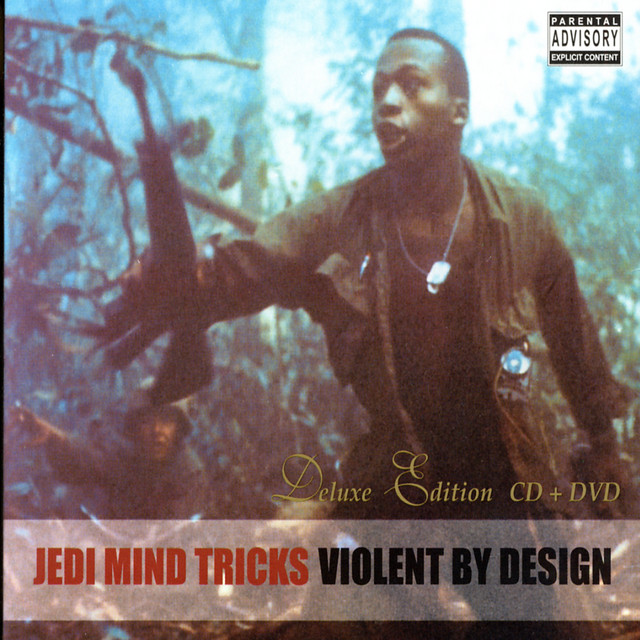
This week's listen: I Against I, Jedi Mind Tricks
Raw, relentless, and built for the kind of mindset this letter is about. Put this on during your off-ball movement drills, your wall ball sets, or your early morning work session when no one else is awake yet. It does not ask you to feel good. It asks you to go.
OPEN INVITE
If any of this resonates, with you or someone in your life, reply here or reach out directly. Not therapy, not a pitch. Just a real conversation.
Until tomorrow!
Kyle | Founder · Harbor Lane Holdings · Atticus Lacrosse Company
Field & Fathom · Harbor Lane Holdings · Daily
Powered By People Who Keep Showing Up

Proud Sponsor
PE training trusted by Blackstone.

Wall Street Prep trains analysts inside Blackstone, KKR, and Carlyle. Now they've teamed up with Wharton Online to bring that same program to you over 8 weeks:
Join LIVE office hours with Wharton Business School faculty, to pressure-test your deal assumptions in real time
Earn a Wharton Online certificate in Private Equity (something more defensible than "I'm pretty good at Excel")
Get lifetime access to materials, events, and a network of 5,000+ professionals who are just as obsessed with deal flow as you are
Program starts June 8. Code SAVE300 saves $300 on tuition.