
Sponsored by

FIELD & FATHOM | No. 041
Daily Letter · Mindset Operating System · 8:42 PM
FATHOM THIS
Jim Collins spent six years studying the companies that outlasted everyone around them, the ones that survived recessions, leadership changes, and the kind of sustained pressure that breaks most organizations long before anyone notices the cracks.
What he found in Built to Last was not what most people expect.
The companies that lasted were not the ones built around a single brilliant idea or a charismatic founder who held the whole thing together through sheer force of personality. They were the ones built by people who thought less about telling everyone what time it was and more about building the clock itself, the systems, the culture, the architecture that kept running long after the person who designed it had left the room.
I think about that distinction constantly while building Harbor Lane.
A great idea is exciting for a season. A clock runs for decades. The goal has never been to be the smartest person in the room making the right calls in real time. The goal is to build something, Atticus Lacrosse, Harbor Lane Company, this letter, that does not need me standing over it every minute to keep functioning the way it is supposed to function.
That requires holding two things at once that most people treat as opposites. Stay true to the core, the values, the why, the thing that does not change. And keep pushing for progress, the how, the methods, the constant willingness to improve even when nothing is currently broken.
Most people pick one. The ones who build something that lasts insist on both.
Here is the question worth carrying into this week. Are you building a clock, something that runs without you, or are you just telling time, standing in the middle of everything, holding it together by your own presence alone?
One of those is sustainable. The other one is exhausting and eventually fragile.
FIELD REPORT | Feet First
I have been thinking about footwork lately, specifically the way basketball trainers approach it compared to how most lacrosse programs treat it as an afterthought.
Steve D'Agostino has spent his career developing basketball players at the NBA and college level, and the thing he comes back to more than anything else is not a shot or a handle. It is the feet. Ten minutes a day on the simple things, stops, pivots, finishes, lateral shuffles, change of direction, and a young player builds a foundation that carries them for the rest of their career. Not because the drill looks impressive. Because everything else gets built on top of it.
I think lacrosse misses this constantly.
We hand kids a stick early and obsess over the hands, wall ball, shooting mechanics, stick skills, and we treat the feet as something that will sort itself out. It does not sort itself out. The feet are the entire foundation underneath every dodge, every defensive slide, every contested ground ball. A player with elite hands and average feet will always lose to a player with average hands and elite feet, because the feet determine whether the hands ever get a clean opportunity to do anything.
Watch what basketball actually builds in a player's body. The ability to absorb contact and re-center without losing balance. The capacity to shuffle laterally at full speed while reading an opponent's hips. The instinct to change direction sharply without losing leverage to the ground underneath you.
Now watch a lacrosse midfielder in a one-on-one dodge or a close defenseman sliding to cut off an angle. Same feet. Same physics. The only difference is what the hands happen to be holding.
Wall ball builds the hands. Cross-training the feet builds the foundation the hands are standing on. Both matter. Neither is sufficient by itself.
Ten minutes. Stops. Pivots. Lateral shuffles. Full speed changes of direction. Before the stick ever goes up. Feet first, every single time.
MINDSET OS | The Only Free Lunch
William Bernstein is a neurologist who became one of the most respected voices in modern investing, which is itself worth sitting with for a second. A doctor who got curious about something outside his field and ended up reshaping how an entire industry thinks about risk.
His core argument in The Intelligent Asset Allocator centers on something Harry Markowitz once called the only free lunch in investing. Diversification. Combine assets that do not move in perfect sync with each other and you can build something that produces a better outcome than any single piece of it could produce alone. The portfolio behaves nothing like its individual ingredients, the same way a finished cake tastes nothing like flour and butter and sugar sitting separately on a counter.
I think about that idea constantly in the context of building a person, not just a portfolio.
The lacrosse player who also plays basketball, who also swims, who also runs track, they are not developing despite the diversification. They are developing because of it. Different movement patterns wiring different pathways. Different competitive pressures building different responses. The combination producing an athlete that pure specialization never could.
And it is the same logic underneath Harbor Lane.
Atticus Lacrosse and Harbor Lane Company are not competing priorities pulling focus in opposite directions. They are uncorrelated assets inside the same portfolio, each one strengthening the whole specifically because they do not rise and fall together. When one is demanding, the other often has room. When one is steady, the other has space to take a risk.
That is not indecision. That is the only free lunch, applied to a life instead of a brokerage account.
Diversify the inputs. Trust that the combination produces something none of the individual pieces could produce alone. Let the portfolio behave like a portfolio rather than forcing every part of your life to look identical.
ON ROTATION | What's Playing
Some tracks need no introduction. They just set the tone.
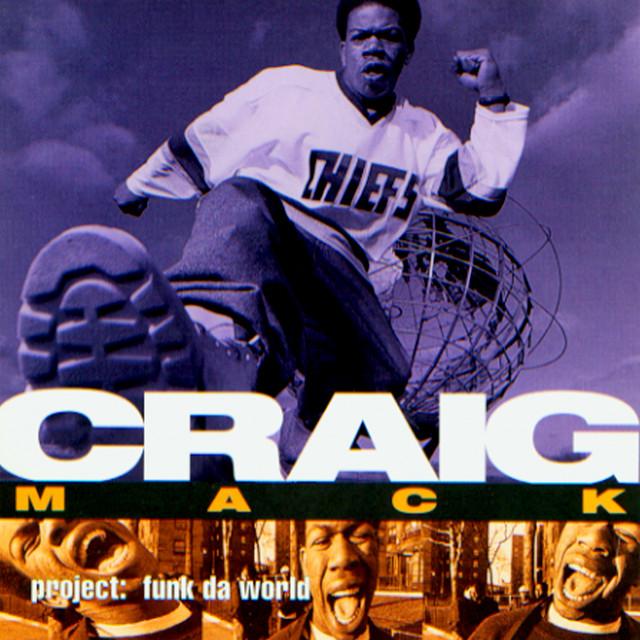
This week's listen: Flava in Ya Ear | Craig Mack, Project: Funk da World (1994)
About the Author
Kyle Smedley is the founder of Harbor Lane Holdings, building at the intersection of sport, people, and capital.
Career stops include Events.com, Tourmaline Builders, Lombardi Contracting Corporation, and DPR Construction. Today he leads Atticus Lacrosse Company, working alongside Mad Dog Lacrosse and Ravenscroft School, and Harbor Lane Company, operating across real estate, private equity, and talent placement.
Field & Fathom goes out every night at 8:42 PM.
Reach out directly: [email protected]
Until tomorrow,
Kyle
Founder · Harbor Lane Holdings · Atticus Lacrosse Company

Field & Fathom · Harbor Lane Holdings · Daily
Powered By People Who Keep Showing Up

Proud Sponsor
The most trustworthy AI admin agent for busy executives.

Busy executive. Packed calendar. An inbox that never empties.
Everyone is talking about AI agents. Every week brings another promise of an assistant that can do it all.
Catch is the real deal.
A smart, proactive AI admin agent focused solely on taking administrative work off your plate.
It schedules meetings, triages your inbox, drafts emails in your voice, resolves conflicts, sends follow-ups, and handles the countless small tasks that consume your day.
Available wherever you work — Gmail, Outlook, Slack, WhatsApp, and even over the phone.
No setup. No training. No learning curve.
Catch learns how you work, takes action when it's confident, and keeps things moving without constant supervision.
From swamped to sorted in seconds.
Get started with Catch and have your assistant ready before your next meeting.